100 pcs
Per colour / design — sizes mixed freely
from $4.80/pc
FOB starting price
7–10 days
Sample turnaround
DDP Door-to-Door
Duties-paid delivery — no customs hassle for first-time importers
Reorder 10–15 Days
Restock fast, no 30-day wait when it sells
30/70 Escrow
30% starts production, 70% only before shipment — after your goods are ready to go
8–12hr Reply
We reply to every inquiry within 8–12 hours
Sample = Standard
Bulk that drifts from your approved sample gets remade, not shipped
Wholesale Hoodies, Made to Order
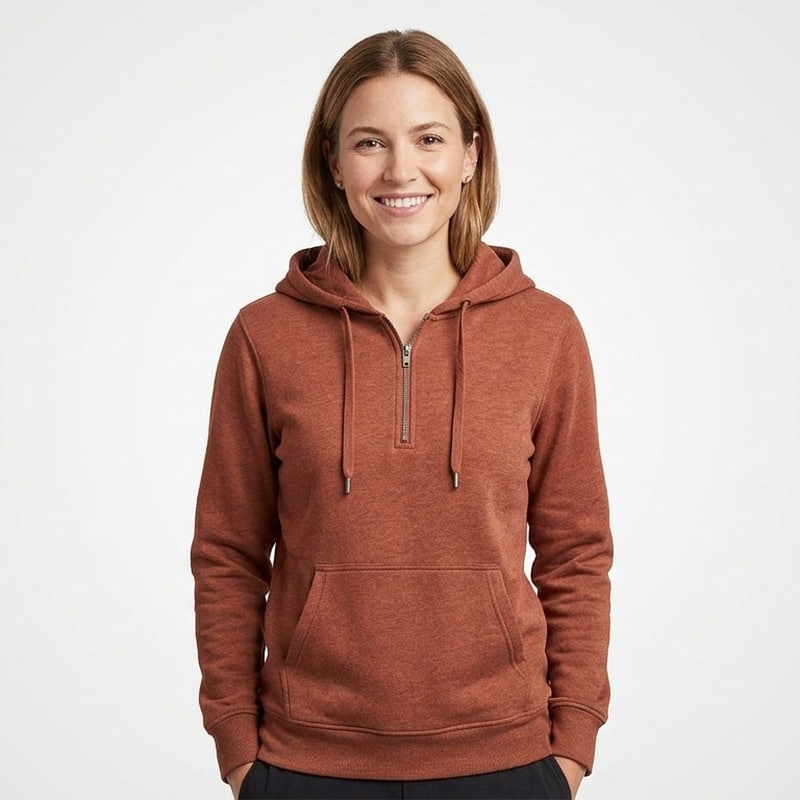
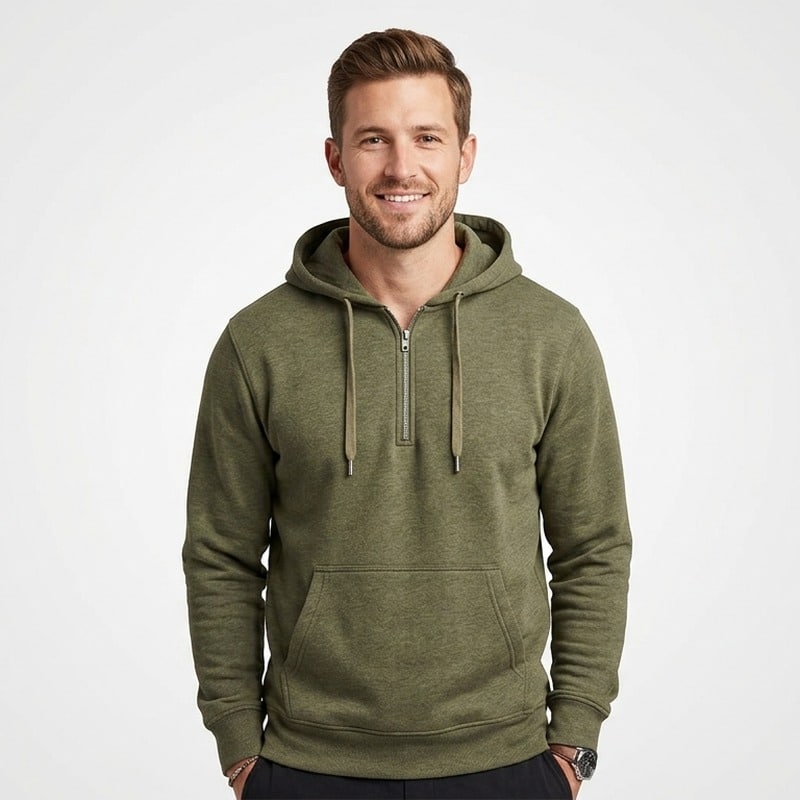
We produce wholesale hoodies as custom, made-to-order runs from just 100 pieces — your own design, fabric weight, fit and label, never pre-made blank stock. Browse recent custom hoodie projects below.


OEM Manufacturing vs. Print-on-Demand: What's Actually Different
Search “custom hoodie manufacturer” and most of the first page is Printify, Printful, and similar platforms — which are print-on-demand services, not manufacturers. The distinction matters: POD services print your logo onto a pre-made blank hoodie from a commodity supplier and ship one unit at a time. A cut-and-sew manufacturer builds the garment from fabric. If you’re sourcing for a brand, a gym uniform program, or any volume above 100 units where margin matters, these are different supply chains with different economics.
This is not a knock on POD. If you need one hoodie shipped directly to a customer with your logo on it, POD does that well and no factory will. The problem is when buyers with a 200-unit order land on a POD platform, assume the economics are equivalent, and leave meaningful margin on the table — or worse, source branded apparel on top of a generic blank that every other brand using that platform also has access to.
Print-on-Demand (Printify / Printful)
OEM Cut-and-Sew (Renrui Textile)
The 100-Unit Cost Math
The comparison above uses approximate market rates to illustrate the structural difference. At 100 units, the gap is large enough to matter for any brand with a retail price above $45. Below is a simplified breakdown of where the cost difference comes from:
| Cost Component | POD at 100 units | OEM at 100 units (FOB) |
|---|---|---|
| Garment (blank or cut-and-sew) | ~$18–$24 (blank + print margin bundled) | ~$9–$12 (cut-and-sew, custom fabric) |
| Decoration (print / embroidery) | Included in above | $0.80–$2.50 depending on technique |
| Label / packaging | Basic tear-away only | $0.35–$0.80 (woven label + hangtag) |
| Shipping to buyer | Included (domestic US) or ~$5–$8 international | ~$2.00–$3.00/unit sea freight to US West Coast |
| Total landed estimate (100 units) | $28–$38/unit | $12–$18/unit |
All figures are approximate. POD costs vary by platform and decoration type. OEM costs depend on fabric spec, decoration, and order volume. Freight costs assume sea freight to US West Coast; air freight adds $3–$6/unit. These are illustrative ranges, not quoted prices.
We regularly quote buyers who have been using a POD platform for 6–12 months and are ready to move to owned inventory. The consistent pattern: they assumed POD economics were “close enough” to manufacturing economics until they ran the number at 150 units and realized the per-unit cost difference would fund a second colorway. The other consistent pattern: they want the garment to be different from the generic blank, not just have their logo on it. That’s the point where OEM manufacturing is the right call, and POD isn’t an option — it can’t do that.
Tariffs & True Landed Cost to the US (2026)
Let’s address the tariff question directly — it’s the first thing on your mind when you source from China, and most manufacturer pages pretend it doesn’t exist. It does, and it changes your math.
US import duty on cotton hoodies (HS 6110.20) has two layers: a 12% base MFN rate, plus whatever Section 301 tariff on Chinese apparel is in effect the day your goods clear customs. That second number moves — anyone printing a fixed percentage on a webpage is quoting you a figure that may be wrong by the time you order. So we don’t print one. Here’s what we do instead:
- We quote the exact combined duty rate in writing on your quote, as of your production date — the real current number, not “roughly 12%,” not a rosy estimate.
- We show it as a separate line — FOB, freight, and duty as three numbers you can check against your own customs broker, never blended into the unit price.
- We can quote DDP — delivered, duties paid, to your US or EU door. One all-in landed number, you never touch customs, no surprise bill at the port. Ask for it in your inquiry.
The formula is simple and we’ll fill in today’s rate for you: Landed cost = FOB + freight + (FOB × current duty %)
For the full breakdown — a worked 300-piece example, FOB vs. DDP compared line by line, and a landed-cost worksheet you can reuse on any quote — see our full guide to China tariffs on your clothing order.
And the honest part: at moderate tariff levels and higher volumes, OEM cut-and-sew still lands below POD per unit even after duty — you’re removing the platform’s blank-markup and per-order fulfillment margin, which dwarf the duty line. At the highest tariff rates on premium heavyweight specs, the landed costs can converge. But at that point you’re comparing a garment built to your spec, in your fabric, with your woven label, against a generic blank every other brand on that platform also uses. Same price, different asset.
What OEM Manufacturing Does Not Do
To be direct about the trade-offs: OEM manufacturing requires a minimum order (100 pieces here), a production lead time (25–35 days), international shipping logistics, and upfront sample development. If you need 10 hoodies for a sample sale next week, we are not the right solution. If you’re building a brand and ordering 100–500 pieces on a cycle, the economics and product quality difference is substantial enough that the logistics overhead is worth absorbing.
Custom Hoodie Styles We Manufacture
All styles listed below are available from 100 pcs per color. Samples are produced in-house by the same team that runs bulk — there is no separate sample contractor.
Pullover Hoodie
The most requested style in our OEM program. We produce pullover hoodies in three silhouette options — standard regular-fit with kangaroo pocket, no-pocket training cut, and split side-seam for athletic range-of-motion. Hood construction options include split-panel two-piece hood and one-piece hood; the two-piece construction sits flatter and is more popular with brand buyers because it photographs better. Drawcord options: flat woven, round cord, no cord (for corporate programs where cord-free is a safety or uniform requirement).
Zip Hoodie — Full-Zip & Half-Zip
Zip hoodies involve more hardware decisions than any other style, and the hardware choices have a real cost impact. Here is how we handle zipper specification:
Full-zip construction:Standard on all orders. Zipper runs from hem to collar. Options for two-way (bottom-open) zipper available at orders above 200 pcs — useful for gym and outdoor programs.
Half-zip (quarter-zip):Zipper runs from collar to approximately chest level. More popular in activewear and corporate programs. Uses a smaller zipper (typically #5 vs. #8 for full-zip), which reduces hardware cost by approximately $0.25–$0.40/unit.
YKK vs. generic zippers:YKK is the recognized quality benchmark in the zipper category. The difference in a production context: YKK zippers run more consistently through automated production equipment (fewer jams), the pull handle finish holds longer without flaking, and the slider mechanism tolerates more open-close cycles before degrading. For a garment you expect a customer to wear and wash 50+ times, the difference is noticeable at the 6-month mark.
On orders of 200+ pieces, YKK (#5 or #8) is our standard specification. On orders below 200 pieces, we use SBS zipper — a Chinese manufacturer that produces acceptable quality at a lower cost point. We disclose the brand on every order confirmation. The cost difference between YKK and SBS on a full-zip hoodie is approximately $0.40–$0.70 per unit at the hardware level. If you require YKK below the 200-piece threshold, we can accommodate it with an explicit upcharge; specify it when you inquire.
Zipper pull options:Standard pull (metal loop), rubber branded pull (minimum 200 pcs for custom die tooling, adds $0.15–$0.30/unit), flat woven pull, and cord-end pull for a more casual aesthetic. The pull is a small detail that affects how finished a garment looks at retail — worth specifying rather than accepting default.
Oversized Hoodie
Drop-shoulder, extended hem, relaxed body. The oversized silhouette requires a graded pattern set that is proportionally wider and longer than a standard-fit pattern — it is not just a size-up on a regular pattern. We maintain a dedicated oversized base pattern, which is important because buyers who ask regular-fit factories to “just make it bigger” often get a garment that reads large rather than intentionally oversized. Typically produced in 300–360gsm fleece because the additional body fabric mass carries heavier weight better without losing drape.
Coach Jacket & Windbreaker
Woven-shell outerwear adjacent to the hoodie category. Coach jackets use a nylon or polyester woven shell rather than knit fleece — which changes the fabric sourcing, the cutting process, and the seam finishing requirements. We produce both unlined and mesh-lined versions. The mesh-lined version adds $1.20–$2.00/unit but meaningfully changes the wearability and perceived quality. Popular for team uniforms, gym programs, and corporate outdoor events where branding visibility matters more than warmth.
Cropped Hoodie
Shortened hem, typically 5–8cm above the natural waist, with a fitted ribbed hem band or raw-edge finish. Produced in both pullover and zip versions. Popular in women’s activewear and streetwear where the cropped silhouette pairs with high-waist bottoms. The ribbed hem band is a separate knitted component that requires a different knitting machine setup — on small orders this adds a modest setup cost that is absorbed into the per-unit price; at 200+ pcs it is a standard inclusion.
Fleece Fabric Options
All fleece fabric is knitted in Guangdong province. We audit each lot for GSM (±5% tolerance), shrinkage (max 5% after 3 washes at 40°C), and colorfastness (minimum 4/5 ISO 105 for wet and dry rub). The table below covers the stock constructions we work with regularly. Custom GSM or fiber blend is available on orders that support a minimum fabric run — typically 500kg, which maps to approximately 600–750 finished hoodies depending on the style.
| Fabric Type | Composition | GSM | Hand Feel | Typical Use | Price Tier |
|---|---|---|---|---|---|
| French Terry | 80% cotton / 20% polyester | 280gsm | Smooth face, loop-back interior — structured, not plush | Most brand and wholesale programs; strong dye uptake for saturated colorways | Mid — most requested |
| Loop-Back Fleece | 100% cotton | 320gsm | Heavier hand, slight surface texture, substantial drape | US and CA market preference; premium positioning; takes embroidery well | Mid-high; 7–10 day additional lead for sourcing |
| Brushed Fleece | 65% cotton / 35% polyester | 260gsm | Soft brushed interior, lighter overall weight | Price-sensitive retail programs; activewear crossover styles | Lower cost tier |
| Heavyweight Terry | 100% cotton or 80/20 | 360–380gsm | Dense, substantial — the fabric reads “quality” on touch | Oversized styles, premium streetwear positioning, cold-weather markets | High; custom-sourced spec |
| Sherpa-Lined Fleece | Shell: 100% polyester fleece; Lining: polyester sherpa | 350gsm (shell) + lining | Plush, warm interior; relaxed exterior drape | Oversized styles for loungewear and outerwear positioning | High; MOQ 100 pcs minimum |
| Organic Cotton Terry | 100% GOTS-certified organic cotton | 280–320gsm | Comparable to standard French terry — softer on some lots | Sustainability-positioned brands; EU market with compliance documentation requirements | 15–22% premium over standard cotton; minimum 200 pcs/colorway |
We declined a fabric supplier in 2023 who was offering 280gsm French terry at 12% below our current supplier. The GSM was consistent, but colorfastness on dark colorways — navy, black, forest green — was grading 3.5 rather than our 4-minimum on the ISO 105 scale. The difference is not visible in a showroom; it shows up after six washes as surface fading on the parts of the garment that take the most mechanical agitation (the front panel, the cuffs). We stayed with the higher-cost supplier. The per-unit impact is approximately $0.15–$0.20. The customer complaint impact would be measurable.
Customization Options
Customization in OEM manufacturing goes beyond decoration. It starts at the pattern level. Below is a full list of what is configurable at each stage of production, with notes on which techniques work on which fabrics — because technique-fabric compatibility matters and gets missed in generic “customization” lists.
Pattern & Cut Customization
This is the level POD platforms cannot touch. Custom cut means we modify the base pattern to match your target silhouette: drop the shoulder point, shorten the hem, adjust the sleeve pitch, widen the hood. Each modification is documented in a revised pattern spec and approved via sample before bulk. If you have an existing hoodie you want to match or improve — send it to us as a physical reference garment. We’ll reverse-engineer the measurements and build a new pattern.
Fabric & Color Customization
Custom-dyed fabric (Pantone or physical color standard) adds 7–10 days to lead time for the dye lot. We match to within 1.0 delta-E on spectrophotometer measurement for standard colors; some fluorescent and very deep colors (jet black, rich navy) require a physical lab dip approval before bulk. We keep the approved lab dip on file for reorders so dye consistency is maintained across seasons.
Decoration Techniques
Embroidery
Screen Print
Puff Print
Silicone Print
Woven Label
Custom Cut (Pattern Modification)
Heat Transfer Label (HTL)
MOQ, Pricing & Lead Time
Real per-unit prices, published. No “contact for pricing” wall, no “request a quote to see the number.” The table below is real — you see what a hoodie actually costs before you send a single email.
The table below shows indicative unit cost ranges for a standard pullover hoodie in 280gsm 80/20 French terry, custom Pantone-matched dye, with screen-printed front logo and woven neck label. These are FOB Shanghai or Ningbo prices. Freight, customs duties (US cotton hoodies, HS 6110.20: 12% base plus any Section 301 tariff in effect — we quote the exact combined rate in writing), and your freight forwarder fee are additional — budget approximately $1.50–$2.50/unit for sea freight to US West Coast at 300-piece volume.
| Tier | Quantity | Unit Cost (FOB) | Lead Time | Notes |
|---|---|---|---|---|
| Sample | 1–3 pcs | $11.50–$20/pc includes proto dev fee |
7–10 days | Plain label; DHL shipping at cost |
| Small Batch | 100–199 pcs | $4.80–$6.50/pc | 25–35 days | Private label from 200 pcs/color |
| Growth | 200–299 pcs | $3.80–$5/pc | 25–35 days | Full private label included |
| Volume | 300–499 pcs | $3–$4/pc | 28–38 days | Custom packaging available |
| Scale | 500+ pcs | $2.60–$3.50/pc | 30–40 days | Priority line allocation; custom fabric run possible |
Indicative starting prices — final quotation depends on fabric specification, print/embroidery method, order quantity and sample confirmation.
Prices shown for 280gsm pullover hoodie, custom dye, printed logo, woven label. Zip-up hoodies add $0.80–$1.40/unit (zipper hardware). Oversized styles add $0.60–$1.00/unit (fabric consumption). Embroidery decoration replaces screen print with minimal cost difference for standard stitch counts. All prices FOB Shanghai or Ningbo. Subject to confirmation based on exact specifications.
Rush production (18–22 days) is available for plain in-stock fabric styles at a 15% surcharge. We offer it selectively — not as a default. Compressing the knit fleece production timeline has specific failure modes, most commonly in the finishing stage where steam pressing and label application get rushed. On any style requiring custom-dyed fabric, rush production is not available: dye lots cannot be accelerated without quality risk, and we’d rather tell you that upfront.
The Manufacturing Process
1. Inquiry & Spec Review
Send your style reference, target fabric, colors, decoration, and quantity. If you have a tech pack, attach it. If you have a reference garment, ship it to us. We respond within 1 business day with a preliminary quote and any technical questions. We don’t require a complete tech pack to start the conversation — but the more complete your spec is, the more accurate the initial quote will be.
2. Pattern & Sample Development — The Step That Determines Everything
This is the step that most buyers underestimate and where most manufacturing problems originate. A tech pack is a document that tells a pattern maker how to build the garment. If you don’t provide one, we build one — but that requires decisions that should come from you, and without your input we’re making assumptions.
- Technical flat sketch (front and back)
- Measurement spec chart with all size points
- Fabric spec: fiber, weight, construction
- Color spec: Pantone numbers or physical standard
- Trim spec: zipper, label, drawcord, cuff rib
- Decoration placement with dimensions
- Seam type callouts (flatlock, overlock, chainstitch)
- Grade rules for each size point
3. Deposit & Fabric Sourcing
30% deposit secures the production slot and triggers fabric ordering. Standard fabric is in stock; custom-dyed fabric is ordered after deposit and requires 7–10 days for the dye lot before cutting begins. Balance is due before shipment. We accept T/T (bank transfer) for production orders and PayPal for samples only.
4. Cutting, Sewing & Inline QC
Production runs 25–35 days. Fabric is spread, marked, and cut on our in-house CAD cutting tables. Sewing follows the approved sample spec. Inline QC is conducted at 30% and 70% completion: we measure a sample of units against the approved spec sheet and check seam integrity, label placement, and decoration consistency. If a deviation is caught inline, we can correct it before the remaining 30–70% is sewn — this is why inline QC matters, not just final inspection.
5. Finishing, Pre-Shipment Inspection & Packing
Finishing includes steam pressing, thread trimming, label attachment, and hangtag clipping. Pre-shipment inspection measures at least 3 units per size against your approved spec, photographs the bulk lot, and confirms carton count and packing list accuracy. We send you the inspection report before issuing the balance invoice — you see the evidence before you pay the remainder.
6. Export Documentation & Shipping
Full export documentation: commercial invoice, packing list, bill of lading, certificate of origin. We coordinate with your freight forwarder or can recommend one our current US and EU clients use. We don’t take referral fees from those introductions. Cartons are export-grade double-wall; garments are folded by size ratio to your specification, not randomly packed.
Selected Client Projects
Names are withheld at the clients’ request. Everything below is from real production runs.
European Streetwear Label — Hoodies, Sweatshirts & Tees
A European streetwear label makes its recycled-fleece hoodies, embroidered hoodies, and combed-cotton tees with us — the kind of program our streetwear clothing manufacturer service is built for. Hoodies and sweatshirts start at 100 a style; we inspect the fleece fully and finish with embroidery, plastisol print, or woven labels. The tees run at a steady 180 to 240 gsm with the weight and rib kept even across the batch, printed screen or DTG. There are 200-plus recycled-fabric colours to choose from.
Outcome: Ten years on, we cover the brand’s core range.
Our Terms, In Writing
Most factories make you email three times to learn their MOQ. Here is everything, up front.
| Term | What we commit to |
|---|---|
| MOQ | 100 pieces per colour / design on fabric dyed to your colour — each colour needs its own dye run, so each colour carries its own 100. Sizes are mixed freely within those 100: no size multiplier, XS to XXL in one run. (Custom woven labels need 200 pcs per colorway — label looms carry fixed setup costs. Screen-printed labels work at lower runs.) |
| Pricing | From $4.80/pc FOB. We don’t publish one fixed unit price — fabric, weight, decoration, colourway count and packaging all move the number. Send us your style and target quantity and we quote every tier (100 / 300 / 500 / 1,000) in one email, so you can see exactly what scaling saves you before committing. |
| Sampling | Sample fee applies per style, itemized on your quote. |
| Bulk production | 25–35 days after sample approval, including fabric sourcing. |
| Reorders | 10–15 days. This is where working with the actual factory pays off. |
| Payment | 30% deposit, 70% before shipment. |
| Shipping | FOB Shanghai or Ningbo, or DDP door-to-door. We quote both, so you can compare true landed cost — not just the factory-gate price. Our factory is in Suzhou, Jiangsu; both ports are within a short inland haul. |
| Certifications | OEKO-TEX® Standard 100 and GRS 4.0. Certificates and our business licence sent on request. |
Why Buyers Trust Renrui Textile
10+ Years
You buy straight from our factory, not through a trading company.
From 100 pcs
100 per colour, and you split those 100 across sizes — we don’t multiply the minimum by size.
Sample = Bulk Standard
Your sample is made on the same line, by the same team that runs your bulk — real samples in days, with the timeline written into the quote. We don’t cut bulk without your written sample sign-off, and if bulk deviates from your approved sample, we remake it.
3-Point QC · AQL 2.5
Checked inline, again at 30% done, and before it ships. If defects exceed AQL 2.5, we remake or refund.
Certified Materials
OEKO-TEX® Standard 100, GRS 4.0, BSCI, ISO 9001
In-House Production
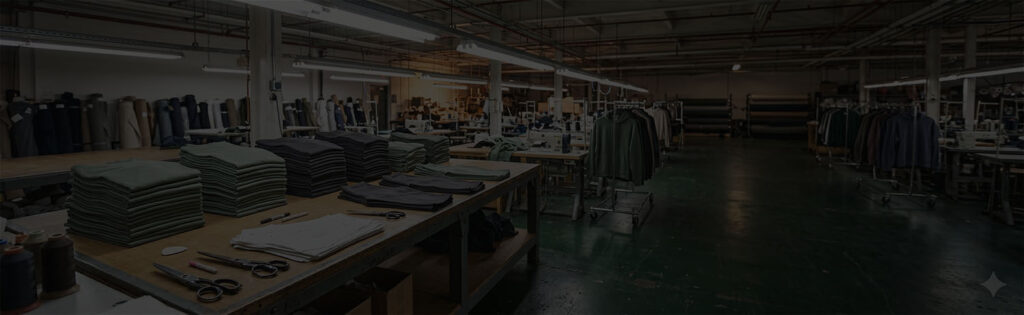
Cutting, sewing, decoration, and labeling all in one place.
Frequently Asked Questions
POD is the right tool for one use case: fulfilling individual orders on demand without holding inventory. It is genuinely better than factory production for that use case. But POD is not a manufacturing option — it is a fulfillment service that charges accordingly. At 100 units, a POD hoodie (blank + decoration + fulfillment) typically costs $28–$38 landed. An OEM hoodie at the same volume costs $12–$17 landed — and it’s a garment you specified, not a generic blank from a supplier catalog that every brand on that platform shares.
The honest comparison: if you’re building a brand and ordering 50+ units at a time, the economics of OEM manufacturing make it the correct supply chain. If you’re testing demand and need zero inventory risk, POD is the correct supply chain. These are different tools for different stages — the mistake is using POD economics at volume where OEM economics are available.
The same 100-piece MOQ applies to embroidered styles — there is no separate embroidery minimum above our standard garment MOQ. The embroidery digitization fee (converting your artwork to a machine-readable stitch file) runs $25–$60 depending on stitch count. That is a one-time cost paid on the first order only; reorders use the same digitized file.
Most chest logos fall between 5,000 and 10,000 stitches. Above 15,000 stitches, the backing required to stabilize the stitch field can cause stiffness on lighter fabrics (260gsm brushed fleece specifically) — we flag this before production rather than after. We also recommend requesting the digitized file back from us so you own it for reorders or for use with another supplier if circumstances change.
Yes. YKK is standard on zip-hoodie orders of 200 pieces or more. Below 200 pieces we use SBS (a Chinese manufacturer) and we disclose that on every order confirmation — we don’t swap hardware silently. The functional difference between YKK and a quality Chinese zipper: YKK runs more consistently through automated sewing equipment (fewer production jams, which actually affects your lead time margin), the pull handle finish holds longer, and the slider tolerates more open-close cycles before degrading. For a garment that will be washed and worn regularly, YKK is the better specification.
The cost difference at the hardware level is approximately $0.40–$0.70 per unit for a full-zip hoodie. The per-garment impact in your total unit cost is smaller, because hardware is one component of the full cost. If you require YKK below 200 pieces, we can accommodate it with an explicit line-item upcharge. Specify it in your inquiry and we’ll quote it directly.
Rush production (18–22 days versus standard 25–35) is available for styles using in-stock plain fabric at a 15% production surcharge. The two hard limits: we do not offer rush on custom-dyed fabric (dye lots cannot be accelerated without color consistency risk), and we do not offer rush on new styles where the sample hasn’t been approved yet (you can’t rush a process that includes revision rounds).
We offer rush selectively because compressing the production timeline on knit fleece has specific failure modes — most commonly in the finishing stage where steam pressing and label application get rushed and produce a garment that measures correctly but doesn’t look right. We’d rather decline a rush request than deliver a compromised order on time. If your timeline is tight, tell us in the initial inquiry so we can assess whether rush is feasible before you’ve committed to a production slot.
Sizing consistency on large runs depends on three things we control: a graded pattern set with documented tolerances per size point (not just a “grade rule” on the base size), fabric that has been pre-washed or relaxed before cutting (unsettled knit fleece can shrink slightly on the cutting table, which then magnifies in wash), and inline measurement audits at 30% and 70% of production rather than only at final inspection.
We provide a pre-shipment measurement report with at least 3 units measured per size against your approved spec sheet. The tolerance we hold is ±1cm on body measurements and ±0.5cm on sleeve length. The apparel industry standard is ±1.5cm — we hold tighter on orders above 200 pieces because at that volume, a 1.5cm deviation across a size run produces a noticeable fit inconsistency that generates customer returns.
Related Manufacturing Services
Request a Custom Hoodie Manufacturing Quote
Why Request a Quote From Us
- ✅ Low MOQ — from 100 pcs per colour / design
- ✅ OEKO-TEX® Standard 100 & GRS 4.0 certified materials
- ✅ Full OEM / ODM — your design, labels & packaging
- ✅ Sample turnaround in 7–10 days
- ✅ Free fabric swatch pack on request
What to Include in Your Inquiry
- Styles & target quantity
- Material / fabric preference
- Target price & deadline
⏱️ We reply to every inquiry within 8–12 hours.
You can also reach us directly:
WhatsApp: +86 13372169755
E-mail: [email protected]