
Serving home textile importers, catalogue retailers and private label brands across EU, US, AU and JP markets since 2009.

What Are Eco-Friendly & Sustainable Textiles?
Eco friendly textiles — sometimes called sustainable textiles or green textiles — are fabrics designed, produced and finished with the lowest possible environmental footprint. Below are the questions buyers most often raise before placing their first sustainable fabric order.
What is a sustainable textile?
A sustainable textile is a fabric produced with minimal environmental impact — using recycled or organic raw materials, low-water dyeing processes, and certified manufacturing facilities. At Renrui, all our core product lines meet OEKO-TEX® Standard 100 requirements.
What are green textiles?
Green textiles is a broad term covering fabrics made through environmentally responsible processes — raw material sourcing, dyeing, finishing and packaging. It overlaps with sustainable textile and eco friendly textile, but emphasises measurable KPIs such as carbon footprint and water consumption per metre.
What are the 5 sustainable fabrics?
The five most widely recognised sustainable fabrics — and how Renrui’s product range aligns:
| Fabric | Key Property | Renrui Product |
|---|---|---|
| Recycled Polyester (rPET) | Diverts plastic bottles from landfill | ✓ Fleece / Blanket |
| Organic Cotton | No pesticide, rain-fed | — |
| TENCEL™ / Lyocell | Closed-loop solvent process | — |
| Hemp | Low water, no pesticide | — |
| GRS-Certified Fleece | Audited recycled content | ✓ Super Soft / Blanket |
Sustainable Textile Innovations
Here is what we have built into our production process — and what the data behind each claim looks like.
rPET Closed-Loop Recycling
Our rPET supply chain starts with bottle-flake sourcing from certified partners in Zhejiang and Jiangsu — a step most buyers never see but one that makes or breaks GRS compliance.
We’ve been running this process since 2019, and the quality variation between bottle-flake suppliers is real. A sub-standard chip batch shows up in finished fabric as inconsistent pill resistance — which is why we conduct supplier audits twice a year and request batch test reports before any production run starts.
Low-Water Dyeing Technology
Our piece-dyeing process uses approximately 30 litres of water per kilogram of fabric — roughly half the industry average of 60–100 litres. The figure was independently verified during our most recent OEKO-TEX® certification renewal audit.
Renrui
30 L / kg
Industry average
60–100 L / kg
▼ Up to 70% less water per kg of fabric produced
Bio-Based Finishing Agents
We use formaldehyde-free softeners and APEO-free treatments across all product grades, in compliance with OEKO-TEX® Standard 100 Annex 6 limits. Anti-pilling performance is tested per ISO 12945-2 before shipment approval.
What are some examples of sustainable innovation in textiles?
Examples include closed-loop rPET yarn, waterless dyeing, bio-based binders for non-wovens, and blockchain-enabled supply chain transparency. Renrui has integrated GRS chain-of-custody audits across all recycled product lines.
Our Eco-Friendly Fabric Product Lines — Fleece, Flannel, Plush & Blanket
Every product range below uses certified sustainable raw materials and is available for OEM / private label orders with low minimum quantities.

Flannel Fabric Manufacturer — Wholesale & Custom B2B
Brushed double-sided flannel in 130–280 GSM. Applications: bed linen, pyjamas, baby apparel, promotional blankets.

Plush & Faux Fur Fabric — Factory Direct
High-pile rabbit-style faux fur and short-pile plush in 200–600 GSM. Used for toys, home décor, outerwear lining.
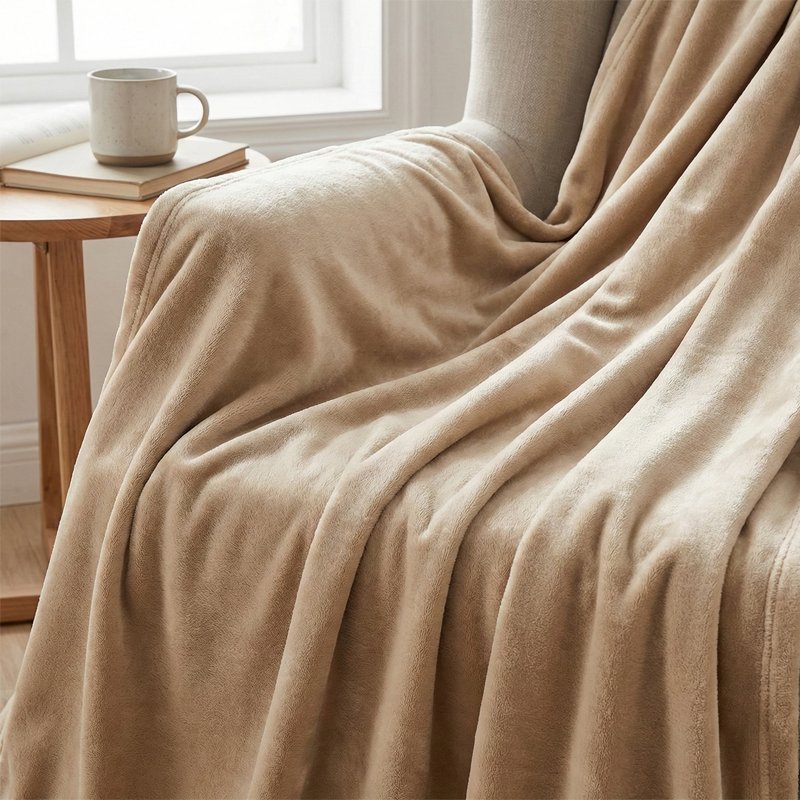
Super Soft Fleece — Low MOQ Available
Microfibre anti-pill fleece in 160–320 GSM. GRS-certified rPET option available. Minimum from 500 metres per colourway.

Custom Blanket Manufacturer — OEM & Private Label
Woven and knitted blankets with custom jacquard, embroidery or print. Full private label packaging available from 100 pieces per design.
Sustainable Textile Solutions for Global B2B Buyers
Sustainability certification has become a baseline requirement in EU, US and Japanese markets. Here are the six measurable outcomes Renrui clients report after switching:
Regulatory Compliance
Pre-empt EU ESPR, REACH and US CPSC requirements with certified fabrics that pass audit first time.
Brand Premium Pricing
Third-party sustainability certificates support 15–30% higher retail price points in eco-conscious markets.
Reduced Compliance Risk
OEKO-TEX® and GRS documentation simplifies customs clearance and retailer onboarding audits.
ESG Reporting Ready
Supplier certificates feed directly into your annual sustainability report and CDP disclosure.
Consumer Loyalty
In our conversations with EU retail buyers over the past two years, sustainability certification has shifted from a ‘nice to have’ to a non-negotiable onboarding requirement. Eight out of ten new clients who contacted us in 2024 cited OEKO-TEX® or GRS compliance as a primary sourcing criterion — up from roughly half that figure in 2021.
We can’t speak for every market, but in the segments we serve (home textile importers, catalogue retailers, private label outdoor brands), the brands that invested in certified supply chains 18 months ago are now clearing retailer audits faster than their competitors.
Supply Chain Transparency
GRS chain-of-custody audit documents provide Tier-2 transparency from fibre to finished fabric.
How can we make textiles more sustainable?
Key strategies: switch to recycled or certified fibres, choose suppliers with third-party certifications, reduce packaging waste and consolidate shipments. A vertically integrated manufacturer like Renrui reduces your Tier-2 supply chain risk by default.
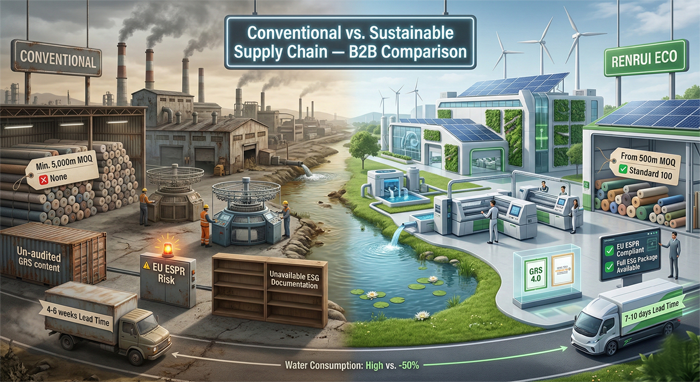
Conventional vs. Sustainable Supply Chain — B2B Comparison
| Factor | Conventional | Renrui Eco |
|---|---|---|
| OEKO-TEX® Certificate | ✗ None | ✓ Standard 100 |
| GRS Recycled Content | ✗ Not audited | ✓ GRS 4.0 |
| EU ESPR Ready | ✗ Risk | ✓ Compliant |
| ESG Documentation | ✗ Unavailable | ✓ Full package |
| Water Consumption | High | –50% vs. baseline |
| MOQ Flexibility | 5,000m min. | From 500m |
| Sample Lead Time | 4–6 weeks | 7–10 days |
Recycled & Biodegradable Textiles
What is a biodegradable textile?
A biodegradable textile breaks down naturally through microbial action without leaving toxic residue. Natural fibres (cotton, wool, hemp) are inherently biodegradable; synthetic polyester is not — however, GRS-certified recycled polyester dramatically extends the product lifecycle by diverting existing plastic from landfill before it can degrade into microplastics.
At Renrui, our position is pragmatic: we offer GRS-certified rPET fleece as a commercially viable, auditable “circular” option for buyers whose ESG frameworks prioritise recycled content over biodegradability.
Renrui’s Circular Material Journey
- Post-consumer PET bottles collected and sorted by recycling partners
- Bottles flaked, washed and granulated into rPET chips
- Chips extruded into high-tenacity polyester filament yarn
- Yarn tufted or knitted into fleece / blanket fabric
- Fabric piece-dyed with ZDHC-compliant low-impact dyes
- GRS transaction certificate issued per shipment
- Buyer incorporates into branded ESG report
Each shipment is accompanied by a GRS Scope Certificate and Transaction Certificate for direct use in your supplier audit documentation.
OEKO-TEX® & GRS Certified — Why It Matters
Renrui holds two independent third-party certifications that directly support your regulatory compliance, retailer onboarding and ESG disclosure needs.
What is OEKO-TEX® Standard 100?
OEKO-TEX® Standard 100 is an independent certification testing every component of a textile — threads, buttons and accessories — for over 100 harmful substances. The label guarantees the fabric is harmless to human health at every contact level (baby skin is the most stringent: Product Class I).
Renrui’s flannel and plush fabric lines hold a current OEKO-TEX® Standard 100 certificate, renewed annually. Buyers receive a copy of the certificate with each order confirmation.
At Renrui, we renew our OEKO-TEX® Standard 100 certificate annually.
What does GRS certification mean for buyers?
GRS (Global Recycled Standard) 4.0 independently verifies the recycled content and chain of custody of a product from raw material source to finished fabric. For B2B buyers, it provides auditable documentation to support ESG reporting, CDP disclosures and retailer sourcing requirements.
Renrui’s GRS certificate covers recycled polyester fleece and blanket products. Each shipment is accompanied by a Transaction Certificate detailing the exact recycled content percentage.
Why Choose Renrui — Low MOQ & B2B Advantages
Based on our experience resolving 50+ buyer onboarding challenges, the three biggest barriers to sourcing eco friendly textiles from China are: minimum order quantities, certification documentation, and sampling speed. Renrui is structured specifically to remove all three friction points.
Low MOQ
From 500 metres per colour per fabric type — accessible for emerging brands.
Cert. Documentation
OEKO-TEX® SC + GRS TC delivered with order confirmation. No extra fee.
7-Day Sampling
Lab dip and physical sample dispatched within 7 working days of colour standard receipt.
OEM / Private Label
Custom labels, packaging and hang-tags from 100 pieces. No design fee.
Standard B2B Workflow
1
Enquiry & NDA
Submit specs or brief via form — 4h response Mon–Fri
2
Technical Review
R&D checks GSM, composition, certification scope
3
Lab Dip Sampling
Colour approval sample dispatched within 7 working days
4
PI & Deposit
30% TT deposit locks production slot
5
Production & QC
In-line inspection + pre-shipment AQL report
6
Shipment & Certs
CIF / FOB + OEKO-TEX® SC + GRS TC issued
Renrui Textile — 15+ Years Sustainable Fabric Manufacturer in China
We founded Renrui in 2009 in Suzhou — not because it was the easiest place to start a textile business, but because the local manufacturing ecosystem (yarn spinning, weaving, dyeing, finishing, logistics) is genuinely unmatched anywhere else in the world.
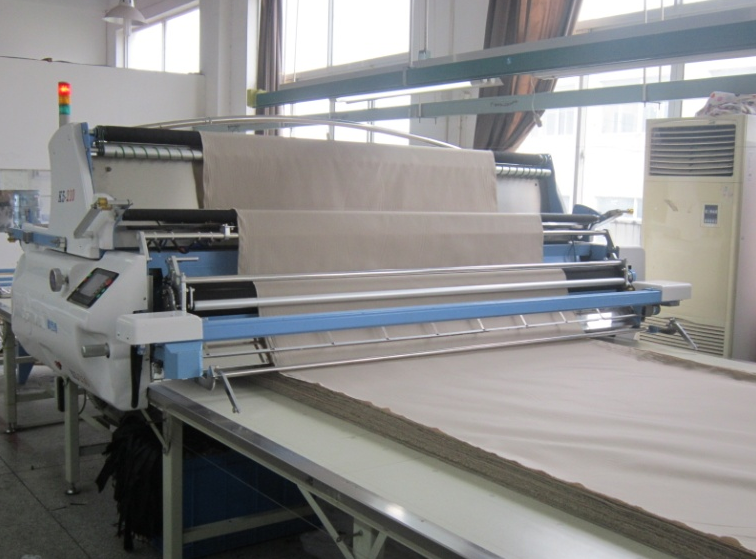
15 years later, we operate a 28,000 m² vertically integrated facility. What ‘vertically integrated’ actually means for you as a buyer: when we quote a 7-day sample lead time, it’s because dyeing and finishing happen under the same roof as weaving. When an OEKO-TEX® auditor needs production records, they’re in a single system, not spread across three subcontractors.
We work with 50+ active B2B clients. Most of them came to us after a quality or compliance problem with a trading company. References available under NDA for qualified buyers.
15+ Years Experience
Dual Certification
OEKO-TEX® Standard 100 (annually renewed) + GRS 4.0 (recycled polyester lines). Certificates available on request.
Vertical Integration
Yarn sourcing → weaving/knitting → dyeing → finishing → QC — all under one roof in our 28,000 m² Suzhou facility.
50+ Client References
Active supplier to 50+ B2B clients globally. References and audit reports available under NDA for qualified buyers.
OEKO-TEX® vs GRS vs GOTS: Which Certification Matters for Your Order?
Not all eco-friendly certifications are equal. Here is what each one actually guarantees — and when you need it.
| OEKO-TEX® Standard 100 | GRS (Global Recycled Standard) | GOTS (Global Organic Textile Standard) | |
|---|---|---|---|
| What it certifies | Finished product is free from harmful substances | Recycled content percentage is verified | Organic fiber origin + responsible processing |
| Covers | Product safety for the end user | Recycled raw materials (rPET, recycled cotton, etc.) | Organic cotton, wool, linen — from farm to finished fabric |
| Scope | Product-level testing | Supply chain traceability | Full chain: farm → yarn → fabric → dye |
| Best for | Baby products, skin-contact textiles, home textiles | Products made from recycled materials | Premium / natural brands using certified organic fiber |
| Renrui certified | ✓ Yes | ✓ Yes (recycled polyester flannel, plush & fleece) |
— Not applicable |
| When to request | Selling to EU retail buyers | Making recycled-content sustainability claims | Sourcing certified organic fiber for premium brands |
Renrui holds active OEKO-TEX® Standard 100 and GRS scope certificates. Certificate copies are available on request — request your certificates.
FAQ
Can I request OEKO-TEX® certified fabric samples before placing a bulk order?
Yes. We dispatch lab-dip samples within 7 working days. For GRS-certified fleece, we include a copy of the GRS scope certificate with each sample pack so you can begin your supplier onboarding audit immediately.
What is the minimum order quantity for eco-friendly fleece or flannel?
Our standard MOQ is 500m per colourway for fleece, and 100 pieces per design for custom blankets. For OEKO-TEX® certified flannel, MOQ starts from 800m.
How long does it take to receive GRS documentation for my ESG report?
We issue GRS Transaction Certificates per shipment, typically within 48 hours of goods leaving our facility.
Does Renrui offer private label packaging for sustainable textiles?
Yes — full OEM and private label options are available for custom blankets from 100 pieces per design.
What is a sustainable textile — and what should B2B buyers actually look for?
A sustainable textile is a fabric produced with minimal environmental impact, using recycled or certified-organic raw materials, low-water dyeing processes, and third-party certified manufacturing (OEKO-TEX®, GRS, GOTS).
For B2B buyers, the most important word is ‘certified’. A supplier can claim sustainability without documentation — and that claim won’t survive a retailer audit or CDP disclosure review. When evaluating suppliers, ask for the certificate number (not just the certificate), verify it’s in scope for your product class, and confirm the certification covers your specific fabric construction.
What are the 5 sustainable fabrics?
The five most widely recognised sustainable fabric types are: (1) Recycled polyester (rPET), (2) Organic cotton, (3) TENCEL™ / Lyocell, (4) Hemp, and (5) GRS-certified fleece. Renrui’s super soft fleece and blanket ranges use GRS-certified rPET yarn spun from post-consumer plastic bottles.
What are green textiles?
Green textiles is a broad term for fabrics manufactured through environmentally responsible processes — covering fibre sourcing, dyeing, finishing and packaging. It is largely synonymous with “sustainable textiles” and “eco friendly textiles,” but tends to emphasise measurable KPIs such as carbon footprint per metre and water consumption.
What are some examples of sustainable innovation in textiles?
Key examples include: closed-loop rPET recycling (PET bottles → fleece), waterless dyeing technology (–50% water vs. conventional), bio-based APEO-free finishing agents, and blockchain-enabled supply chain transparency. Renrui has implemented rPET yarn sourcing and GRS chain-of-custody audits across its recycled product lines since 2021.
What is a biodegradable textile?
A biodegradable textile breaks down naturally through microbial action without leaving toxic residue. Natural fibres (cotton, wool, hemp) are inherently biodegradable; synthetic polyester is not. However, GRS-certified recycled polyester is the most commercially viable near-term option: it diverts existing plastic from landfill and cuts CO₂ emissions by up to 60% versus virgin fibre.
What is OEKO-TEX® Standard 100?
OEKO-TEX® Standard 100 independently tests every component of a textile — threads, buttons, accessories — against a list of over 100 harmful substances. Four product classes exist; Class I (for babies under 3) is the most stringent. Renrui holds a current Standard 100 certificate covering its flannel and plush lines, renewed annually by an accredited OEKO-TEX® institute.
What does GRS certification mean for buyers?
GRS (Global Recycled Standard) 4.0 provides independent verification of recycled content and chain of custody from fibre source to finished fabric. For buyers, it supplies auditable documentation for ESG reports, CDP disclosures, and retailer onboarding audits. Renrui issues a Transaction Certificate (TC) per shipment detailing the exact percentage of recycled content.
How can we make textiles more sustainable?
The most effective actions: (1) Switch to recycled or certified-organic fibres, (2) Require OEKO-TEX® / GRS certified suppliers, (3) Reduce unnecessary packaging, (4) Consolidate shipments to lower transport emissions, (5) Partner with a vertically integrated manufacturer to gain Tier-2 supply chain transparency. Renrui’s integrated structure eliminates most Tier-2 risk by default.
About Renrui
Founded in 2009 in Jiangsu, China, Renrui Textile grew out of one straightforward goal: supply global buyers with eco-certified fabrics at practical MOQs, without the compliance gaps that trading companies can’t fix.
In our early years, we focused on mastering flannel and plush fabric manufacturing for bedding and home textile clients across Europe and North America.
As sustainability regulations tightened in key export markets — particularly the EU’s REACH standards and growing retailer codes of conduct — we made the strategic decision in 2020 to pursue OEKO-TEX® Standard 100 certification. Not because the market demanded it at the time, but because we believed it was the right thing to do for our clients’ brands and for the planet.
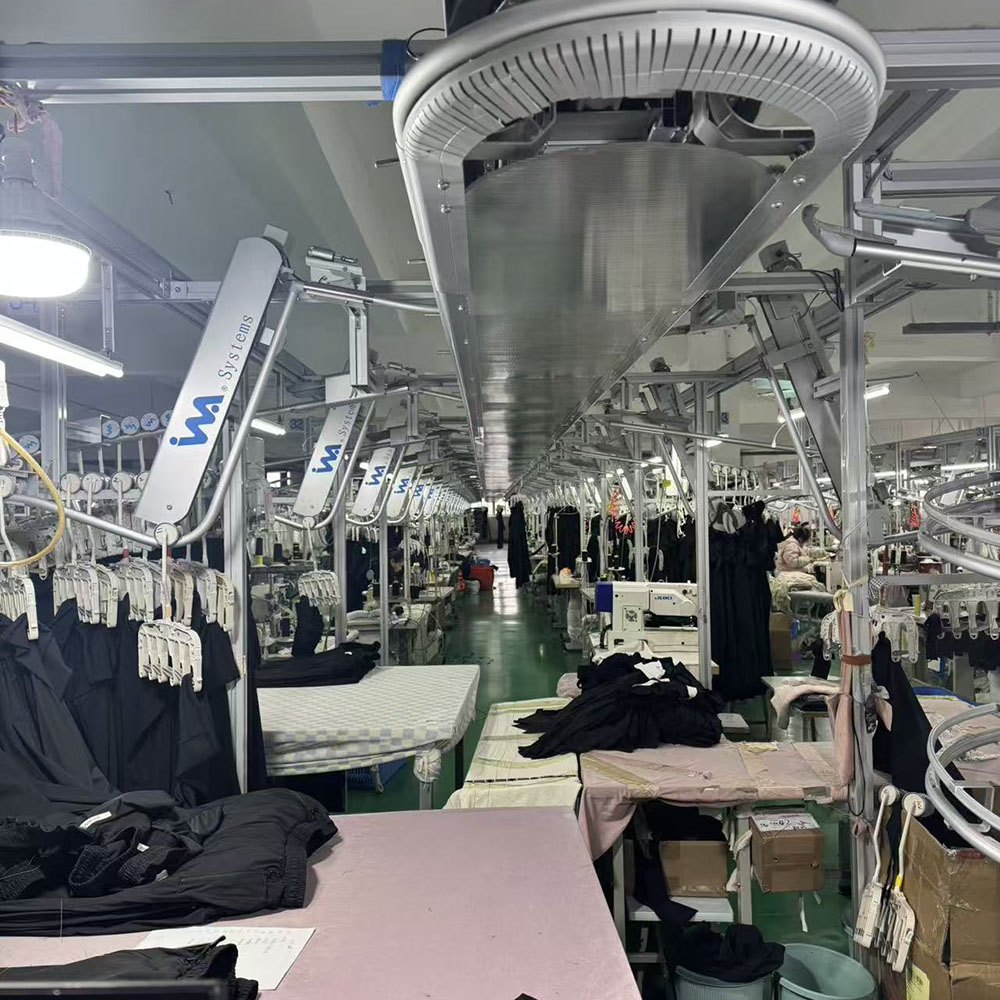
Today, Renrui operates production lines across 28,000 m² of factory floor space, employing 100+ skilled textile workers.
Related Articles & Resources
More guides on eco textiles, certifications and fabric sourcing from Renrui.
Eco Friendly Textile Manufacturers
How to evaluate and shortlist certified sustainable fabric manufacturers for B2B sourcing.
What Is Flannel Fabric? Properties, Uses & Wholesale Guide
A buyer’s guide to flannel — fabric construction, weight options, end-use applications and what to look for when sourcing wholesale flannel fabric.
How to Make Textiles More Sustainable: A Complete Guide
Key strategies for sourcing teams — from switching to certified fibres to consolidating shipments and reducing Tier-2 supply chain risk.
The 7 R’s of Sustainable Fashion Explained
Reduce, Reuse, Recycle — and the four other R’s shaping the circular fashion agenda.
Biodegradable Textiles: The Future of Eco Fabrics
Which fibres biodegrade safely, how to verify claims, and what certifications confirm biodegradability in practice.
Sustainable Textile Innovations: Real-World Examples
GRS-certified rPET, waterless dyeing, closed-loop systems — real-world innovations reshaping sustainable textile production.
GRS Certified Fabric Manufacturer
Full details on our GRS 4.0 certification scope, recycled polyester fabric range, and how to request Transaction Certificates for your ESG reports.
Wholesale Blanket Supplier
Factory-direct wholesale blankets — fleece, plush, sherpa, flannel and faux fur. OEKO-TEX® & GRS certified, 100-pc MOQ, custom OEM available.
Home Textile OEM Manufacturer
Custom OEM and private label home textiles — blankets, fleece, plush and flannel under your brand. OEKO-TEX® & GRS certified.
Sustainable Development in Textiles: Trends & Practices
How UN SDGs, science-based targets and circular economy principles are reshaping B2B textile procurement.
Related Resources
GRS Certified Recycled Fabric Manufacturer
Full details on our GRS 4.0 certification scope, recycled polyester fabric range, and how to request Transaction Certificates for your ESG reports.
The Honest Guide to Sourcing Sustainable Home Textiles
How to evaluate supplier sustainability claims, what certifications actually mean, and a practical checklist for B2B buyers sourcing eco-friendly home textiles.
Request an Eco-Friendly Textile Quote
Why Request a Quote From Us
- ✅ Low MOQ — from 100 pcs per colour / design
- ✅ OEKO-TEX® Standard 100 & GRS 4.0 certified materials
- ✅ Full OEM / ODM — your design, labels & packaging
- ✅ Sample turnaround in 7–10 days
- ✅ Free fabric swatch pack on request
What to Include in Your Inquiry
- Styles & target quantity
- Material / fabric preference
- Custom logo & labeling needs
- Target price & deadline
⏱️ We reply to every inquiry within 8–12 hours.
You can also reach us directly:
WhatsApp: +86 13372169755
E-mail: [email protected]