100 pcs
Per colour / design — sizes mixed freely
from $1.50/pc
FOB small-batch starting price
7–10 days
Sample turnaround
DDP Door-to-Door
Duties-paid delivery — no customs hassle for first-time importers
Reorder 10–15 Days
Restock fast, no 30-day wait when it sells
30/70 Escrow
30% starts production, 70% only before shipment — after your goods are ready to go
8–12hr Reply
We reply to every inquiry within 8–12 hours
Sample = Standard
Bulk that drifts from your approved sample gets remade, not shipped
The Real Problem with MOQ in Clothing Manufacturing
The phrase “low MOQ” is one of the most abused claims in contract apparel manufacturing. A supplier quotes 100 pieces, you place the order — then you discover the 100-piece minimum applies per size as well. One colour in four sizes suddenly becomes a 200-piece commitment. We’ve heard this story from a majority of the brands that first contact us, typically after a frustrating first production experience elsewhere.
Our policy is stated up front, including the part most factories hide. On fabric dyed to your colour, the minimum is 100 pieces per colour — each colour needs its own dye run, so each colour carries its own 100. Sizes you split freely within that 100: XS to XXL in one run, no size multiplier. And if 4 colours × 13 pieces is what your first drop needs, the honest answer is that we cannot make it: each colour needs its own dye run, so 4 colours means 4 × 100. What we can keep genuinely small is a single-colour first order — 100 pieces, every size inside it, no multiplier.
Below, we’ve laid out our core services, process, and policies. If a section raises a question that isn’t answered, the FAQ at the bottom covers the most common ones — drawn directly from conversations with clients over the past several years.
OEM Clothing Manufacturing Services
We operate as an OEM clothing manufacturer — you provide the design specification (tech pack, reference sample, or detailed sketch), we handle production end to end: fabric sourcing, sampling, bulk manufacturing, quality control, labeling, and shipment. The three primary program types are below.
✂️ OEM Clothing Manufacturing
You supply the design — a tech pack, a reference garment, or detailed sketches. We source fabric, develop samples, and run bulk production to your specification. Most suitable for brands that have already finalized their design direction and want a reliable production partner without factory markup layers.
🏷️ Private Label Clothing Manufacturing
Everything in OEM, plus your brand identity on the finished garment: woven main labels, care labels, hangtags, polybag stickers, and retail-ready packaging. This is what most growing brands need — the product is manufactured to your spec and presented as entirely yours. We hold no intellectual property over your designs.
One practical note: custom woven labels require a minimum of 100 pieces per colorway because label looms carry fixed setup costs. Screen-printed labels can be applied at lower runs.
🧵 Cut and Sew Manufacturing
For designs that don’t fit standard blank apparel — unique silhouettes, engineered prints, performance panels, or technical construction. Fabric is cut to custom patterns and sewn into finished pieces, giving complete control over shape, material, and construction detail. Lead times are longer than basic jersey programs due to pattern complexity, and sampling typically requires two rounds.
OEM vs. ODM: Which Applies to Your Project?
Both terms come up in factory conversations. The practical distinction matters for how you structure your first inquiry.
| Factor | OEM (Original Equipment Manufacturer) | ODM (Original Design Manufacturer) |
|---|---|---|
| Design source | Client provides design | Factory provides design |
| Brand control | Full — IP stays with brand | Shared — factory retains design rights |
| Development cost | Client absorbs sampling costs | Lower upfront; factory amortizes over MOQ |
| Differentiation | Unique to your brand | Same design sold to multiple buyers |
| Best for | Brands with defined design direction | Buyers testing a category with no design resource |
| Our recommendation | OEM for any brand building long-term equity. ODM acceptable for testing product-market fit in a new category — but design IP is a long-term asset worth protecting from the start. | |
Cut and Sew Manufacturing: Step by Step
Cut and sew is the most involved production path — it’s also the one that gives a brand the most distinctive product. Understanding where each stage can stall helps set realistic timelines before production booking.
What Categories Are Available with Low MOQ?
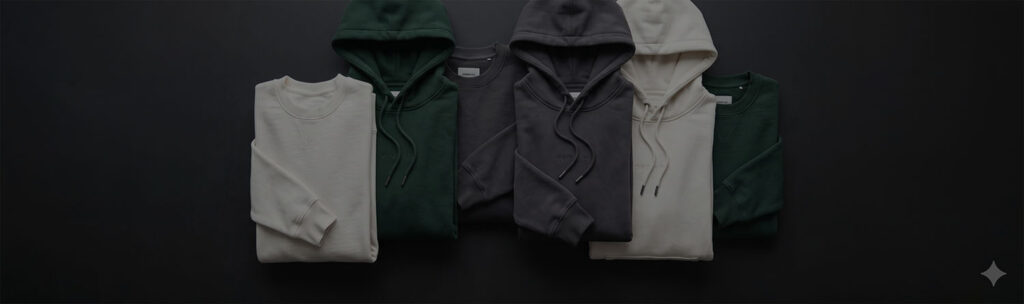
Jersey knit categories — T-shirts, tank tops, hoodies, sweatshirts, sweatpants, activewear — run from 100 pieces because the construction is simpler and fabric yields are predictable. Woven products and technical outerwear typically start at 100 pieces due to higher pattern complexity and fabric waste in cutting.
Building a full women’s line — sleepwear, loungewear, leggings and tops together? Our women’s clothing manufacturer page covers running the whole mix from one factory.
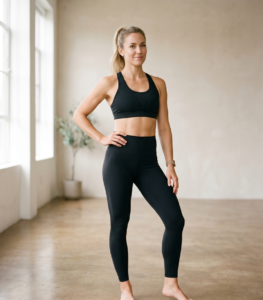
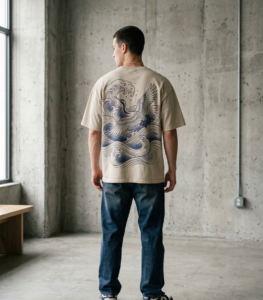
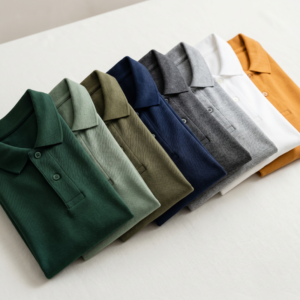
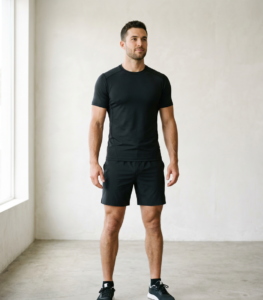
Indicative Pricing by Category
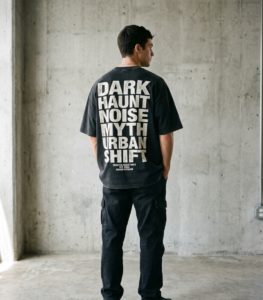
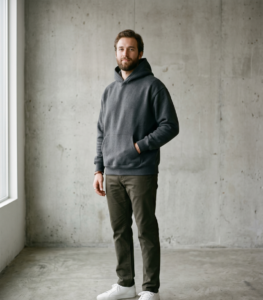
These are FOB unit costs from jobs we’re actually running. What you pay shifts with the fabric weight, how it’s decorated, and the labeling. Woven and technical pieces usually start at 100.
| Category | Small Batch (100 pcs/color, FOB) | Sample | Bulk (500+ pcs) |
|---|---|---|---|
| T-Shirts | $1.80–$3.00 | $8.50–$15 | $0.80–$1.40 |
| Tank Tops | $1.50–$2.30 | $6.50–$10.50 | $0.60–$1.10 |
| Crewneck Sweatshirts | $3.80–$5.50 | $11.50–$18.50 | $2.70–$3.50 |
| Hoodies | $4.80–$6.50 | $11.50–$20 | $2.60–$3.50 |
| Leggings / Activewear* | $4.80–$7.00 | $16–$23 | $3.00–$4.40 |
| Pajama Sets (knit) | $4.00–$5.50 | — | $2.30–$3.10 |
| Pajama Sets (woven) | $5.50–$7.00 | — | $3.10–$4.00 |
*Activewear (leggings, sports bras, compression) starts at 100 pcs/colorway. All figures are indicative FOB ranges, not binding quotes — request a quote for exact pricing on your spec.
What We Can Offer That Most Factories Can't
The list below isn’t a marketing checklist — it reflects specific structural decisions we’ve made about how to run a low-MOQ operation, and where those decisions create real differences in client experience.
Product Catalog & Capability Overview
Our full product catalog covers 80+ garment styles across all categories, with construction details, available fabric weights, certification options, and standard MOQ by product type. The capability document includes QC protocols, factory certifications, and capacity details for procurement teams that require supplier qualification documentation.
Selected Client Projects
Names are withheld at the clients’ request. Everything below is from real production runs.
European Independent Designer Label — Multi-SKU Test Launch
A European startup had no budget to sit on stock but wanted to test six styles of polos and fitness tanks in a few colours. Most factories quoted them 300 a style. We took it at 100 per style and colour and shipped the styles together. The fabric was in-stock GRS recycled, so there was no waiting on a dye lot; samples confirmed in 7 days, bulk in 28. We also laid out their basic hangtag and wash label at no charge. Materials are OEKO-TEX-compliant.
Outcome: All six SKUs went live. Three tanks and two polos sold through in three months, they reordered four times, and the strong styles have settled into 300 to 800-piece restocks.
New Amazon US/EU Seller — Low-Risk Test Listings
A first-time cross-border seller wanted to test a couple of listings without burying cash in stock: basic solid polos and racerback tanks, FBA-ready. We ran the polos from 80 and the tanks from 60, mixed colours, and skipped the usual plate fee on the small print run. Goods went out packed to standard with the Amazon carton barcodes on, and we booked the sea freight to their overseas warehouse.
Outcome: Both test listings sold daily, they restocked three times in three months, and the test turned into monthly orders.
Our Terms, In Writing
Most factories make you email three times to learn their MOQ. Here is everything, up front.
| Term | What we commit to |
|---|---|
| MOQ | 100 pieces per colour / design on fabric dyed to your colour — each colour needs its own dye run, so each colour carries its own 100. Sizes are mixed freely within those 100: no size multiplier, XS to XXL in one run. (Custom woven labels need 200 pcs per colorway — label looms carry fixed setup costs. Screen-printed labels work at lower runs.) |
| Pricing | From $1.50/pc FOB. We don’t publish fixed unit prices — fabric, weight, decoration, colourway count and packaging all move the number. Send us your style and target quantity and we quote every tier (100 / 300 / 500 / 1,000) in one email, so you can see exactly what scaling saves you before committing. |
| Sampling | Sample fee applies per style, itemized on your quote. |
| Bulk production | 25–40 days after sample approval, including fabric sourcing. |
| Reorders | 10–15 days. This is where working with the actual factory pays off. |
| Payment | 30% deposit, 70% before shipment. |
| Shipping | FOB Shanghai or Ningbo, or DDP door-to-door. We quote both, so you can compare true landed cost — not just the factory-gate price. Our factory is in Suzhou, Jiangsu; both ports are within a short inland haul. |
| Certifications | OEKO-TEX® Standard 100 and GRS 4.0. Certificates and our business licence sent on request. |
Why Buyers Trust Renrui Textile
10+ Years
You buy straight from our factory, not through a trading company.
From 100 pcs
100 per colour, and you split those 100 across sizes — we don’t multiply the minimum by size.
7–10 Day Samples
We put the sampling timeline in writing with every quote.
3-Point QC · AQL 2.5
Checked inline, again at 30% done, and before it ships. If defects exceed AQL 2.5, we remake or refund.
Certified Materials
OEKO-TEX® Standard 100, GRS 4.0, BSCI, ISO 9001
In-House Production
Cutting, sewing, decoration, and labeling all in one place.
Clothing Manufacturing FAQ
The questions below come from actual client conversations over the past several years — not a generic list of what we thought people might ask.
Our MOQ starts at 100 pieces per style for most categories — T-shirts, hoodies, activewear, and workwear. Some cut-and-sew programs accept 30 pieces for repeat clients. We don’t apply hidden per-colorway multipliers: 100 pieces means 100 finished garments, full stop. If a supplier quotes you 100 pieces and the order comes out to 200, ask them to explain how they count.
Standard samples are delivered within 7–10 business days after design confirmation and fabric approval. In practice, first samples almost always require one revision round — budget 2–3 weeks for a fit-approved proto before production booking. Complex cut-and-sew styles with engineered seaming or technical panels may require two rounds; we flag this before the sampling quote.
Private label programs — custom woven labels, hangtags, and branded packaging —
have a 100-piece minimum per colorway. That threshold exists because label setup
and packaging tooling carry fixed costs that can’t be spread across fewer units
without making per-unit pricing unworkable for most brands.
If you specifically need branded garments at quantities below 100 pieces, screen-printed
inner neck labels are an option that avoids the woven label setup cost. They’re not
identical to a woven label in terms of perceived quality, but they’re the practical
solution at that volume.
T-shirts, hoodies, crewneck sweatshirts, activewear, yoga wear, cut-and-sew streetwear, bomber jackets, and workwear uniforms are all available from 100 pieces. Woven products — dress shirts, chinos, outerwear with complex lining — typically start at 100 pieces due to higher pattern complexity and fabric waste ratios in cutting. If you’re not sure which category your product falls into, send us the reference and we’ll confirm before quoting.
OEM means you provide the design — a tech pack, sketch, or reference sample — and
we manufacture it to your specification. Private label means the finished garment
carries your brand identity: labels, tags, and packaging bear your brand, not ours.
In most client engagements these two overlap: brands provide OEM designs and request
private label branding in the same order. The distinction matters mainly when discussing
IP ownership — in OEM arrangements, all design rights remain entirely with the client.
Yes, and startups make up roughly 40% of our new client inquiries each year.
The honest caveat: launching with 100-piece runs is viable, but unit costs are
meaningfully higher than at 300+ pieces — this is true everywhere, not just with us.
Most startup clients who stay with us for 2–3 seasons reach volume levels where
per-unit economics shift substantially — without us ever requiring a formal volume
commitment upfront. The clients who get the most out of the relationship early tend
to be the ones who start with one style, get it right, and then scale — rather than
trying to launch 8 styles simultaneously at 100 pieces each. New to this? Our factory-side walkthrough on how to start a pajama brand lays out the budget, timeline, and first-order math step by step.
Related Manufacturing Services
Request a Sample or Quote
Why Request a Quote From Us
- ✅ Low MOQ — from 100 pcs per colour / design
- ✅ OEKO-TEX® Standard 100 & GRS 4.0 certified materials
- ✅ Full OEM / ODM — your design, labels & packaging
- ✅ Sample turnaround in 7–10 days
- ✅ Free fabric swatch pack on request
What to Include in Your Inquiry
- Styles & target quantity
- Material / fabric preference
- Target price & deadline
⏱️ We reply to every inquiry within 8–12 hours.
You can also reach us directly:
WhatsApp: +86 13372169755
E-mail: [email protected]