
100 pcs
Per colorway — activewear fabric minimums
from $4.80/pc
FOB starting price
7–10 days
Sample turnaround
DDP Door-to-Door
Duties-paid delivery — no customs hassle for first-time importers
Reorder 10–15 Days
Restock fast, no 30-day wait when it sells
30/70 Escrow
30% starts production, 70% only before shipment — after your goods are ready to go
8–12hr Reply
We reply to every inquiry within 8–12 hours
Sample = Standard
Bulk that drifts from your approved sample gets remade, not shipped
Custom Private Label Activewear


What Private Label Activewear Actually Requires
Most factories that manufacture T-shirts, hoodies, and casualwear can, in a mechanical sense, cut and sew activewear. The fabric feeds through the same machines. The problem is that activewear construction on 4-way stretch performance fabric is not simply “sewing but stretchier.” (For ground-up OEM development — your own fit block and fabric spec rather than branding on proven blocks — see our activewear manufacturer page.) Every step of the process — needle selection, stitch tension calibration, seam type, pressing, and final measurement — operates differently when the base fabric recovers to a different dimension than it measures under tension.
Four technical requirements separate a production-grade activewear factory from one that “also does activewear”:
4-Way Stretch Seaming
Standard lockstitch seams — the stitch used on woven garments — break at 15–20% stretch. Activewear fabrics, depending on the construction, stretch 50–150% in both directions. Flatlock seaming lays the seam flat against the body and distributes stretch load across multiple needle lines. Coverstitch seams add a decorative top thread while providing the necessary elongation. A factory without flatlock and coverstitch capability is using overlock seams that will pop under real use conditions. We run dedicated flatlock machines on every activewear production line — they are not shared with our knit casualwear lines because the tension calibration is different.
Sublimation Print Registration
Sublimation printing transfers dye into polyester fiber under heat and pressure. When the print is applied to cut panels before sewing, the seam construction must account for the dimensional change at the seam line — the print pattern needs to be pre-distorted to read correctly in the finished garment. When applied to finished garments, heat and pressure must be even across curved three-dimensional surfaces. Factories that use flat-bed presses for T-shirts and then apply the same equipment to fitted activewear get registration shift at side seams and underarms. We use a combination of pre-sew panel printing and wrap-press finishing depending on the garment construction.
Moisture-Wicking Fabric Handling
Moisture-wicking performance fabrics — typically nylon-spandex or polyester-spandex — have a surface structure that rejects water. This is desirable in the finished garment. It creates problems in dyeing, finishing, and bonded seam construction. Dye uptake is lower than on cotton-based fabrics, which means color consistency across a production lot requires tighter dye bath control. Bonded seams — where a tape replaces the visible seam stitch — require adhesive systems matched to the fabric surface energy. We’ve had clients arrive with bonded-seam activewear specs that required a different adhesive than the factory’s standard stock. We identify this in the tech pack review, not during production.
Waistband Construction Under Load
A legging waistband is a structural element that holds the garment in place under 80–120% stretch during deep squats and lunges. Waistbands that are too narrow, insufficiently bonded to the body panel, or constructed with the wrong elastic specification roll down under use. We test waistband construction on every new legging spec: a 30-cycle stretch-recovery test at 100% elongation before approving the construction for bulk.
We had a client send us a competitor sample as a reference garment for their first legging order. The sample looked good. When we pulled the flatlock seam on the inner thigh, it opened at about 35% stretch. The factory that made the sample was using a standard overlock with a long stitch — it passed visual QC and photographed well, but it would not survive a gym session. We documented this, rebuilt the seam spec, and sent a comparison pull-test photo. That’s the kind of thing a factory that actually works in activewear fabric does before quoting, not after bulk production.
Activewear Categories We Manufacture
All styles below are available from 100 pcs per style per colorway. Samples are made in-house on the same production equipment — we do not use a separate sample room. Fit samples ship via DHL in 7–10 days from tech pack confirmation.
Looking for fabric choice and GSM basics? This page covers construction engineering and private label branding depth for these same categories — for fabric weight, squat-proof opacity testing and first-order guidance, see our activewear manufacturer overview.
Leggings & Yoga Pants
Leggings are our highest-volume activewear item and, technically, the most complex to produce consistently across a run. Because the same style is cut at multiple sizes and the stretch recovery varies across the size range, tension calibration has to account for the dimensional difference between an XS and an XL hitting the same flatlock machine. Factories that don’t adjust tension by size block produce leggings that fit XS and M correctly but have seam stress at the thigh and calf on XL and XXL. We run size-specific tension checks as a standard part of our activewear production process.
Every legging construction decision — seam placement, waistband type, gusset option — has a downstream effect on fit, function, and durability. The breakdown below is what we discuss with every client before cutting a single proto:
Inner leg seam vs. side seam vs. no-seam (seamless, requires different equipment). Inner leg flatlock sits against the skin — placement affects chafing. We recommend seams that track parallel to muscle groups, not across them.
Folded self-fabric band (most common), separate ribbed waistband, or bonded elastic insert. Fold-over bands look clean but roll on low-rise styles. Bonded inserts add $0.40–$0.65/unit but hold position reliably. We don’t recommend fold-over on high-rise performance specs.
No gusset (cheaper, fails faster under squat movement), standard diamond gusset (adds 1 seam intersection, improves range of motion), full-drop triangle gusset (highest durability for yoga/pilates clients). Gusset adds $0.20–$0.35/unit depending on construction.
Single-fabric (most common), color-blocked (multi-fabric panels, requires registration), mesh insert panels (ventilation zones, laser-cut or sewn), compression gradient zones (different denier in upper vs. lower leg require panel seaming).
No pocket, slip pocket in waistband fold (fits cards, not phones), hidden zip pocket (adds $0.55–$0.80/unit, popular for running). Pocket placement affects waistband structure — pockets in the wrong position create visible bulk under tighter fabrics.
Raw hem coverstitch, turned-and-stitched, elastic hem insert, or laser-cut edge (on neoprene-adjacent fabrics). Standard length: full length, 7/8, capri. We cut custom inseam lengths on orders above 300 pcs.
For the squat-proof fabric weight (GSM) behind these construction choices and published FOB pricing, see our dedicated leggings manufacturer page.
Sports Bras
Sports bras are built in three support levels — low (yoga, pilates), medium (cycling, hiking), and high (running, HIIT). The construction differs meaningfully between them: low-support styles use a shelf construction with removable pads; medium-support adds an encapsulated or compression band; high-support requires an underwire channel or structured rigid band. We produce all three levels. Strap configurations available: straight, crossed, T-back, Y-back, racerback. Custom removable pads supplied from our nominated foam supplier; we can work with client-supplied pads if specifications are provided in the tech pack.
Gym Shorts & Biker Shorts
Men’s training shorts (5″ and 7″ inseam, with or without mesh liner), women’s biker shorts (high-rise, flatlock construction matching legging specs), and board-style training shorts with woven shell. The liner on men’s training shorts is the most common construction issue we see in reference samples — cheap mesh liners bunch, the waistband integration is often poorly sewn, and the liner length is cut too short to prevent ride-up. We use separate liner elastic and a double-needle attachment at the waistband join.
Full pricing and FAQ for this category: custom shorts manufacturer.
Compression Tops & Crop Tops
Short-sleeve, long-sleeve, and sleeveless compression tops in 220–260gsm nylon-spandex or polyester-spandex. The defining construction requirement is uniform compression around the torso without the seam lines at the shoulder restricting arm range of motion. We place shoulder seams on the top of the shoulder, not the back of the shoulder — a small detail that makes a measurable difference on overhead movements. Crop tops are available in banded hem or roll-under fold finish.
Yoga Sets & Coordinating Sets
Matching legging-and-top or legging-and-sports-bra sets. The coordination question is fabric lot matching — when two separate items are sewn from the same print or dye lot, they need to come from the same fabric roll cut. We batch-coordinate fabric cuts for sets and flag this explicitly in the production order. Sets that are cut from different dye lots produce the kind of visible color mismatch that generates customer returns, and it happens when the factory doesn’t treat set coordination as a production management task.
Running Jackets & Lightweight Shells
Windproof and water-resistant shells in 70–90gsm woven nylon or polyester-spandex bonded constructions. These are separate from our stretch knit activewear program in terms of construction method — woven shells use lockstitch construction with seam sealing tape at key water-entry points rather than flatlock. We produce both. Reflective print strips and bonded YKK zippers are standard spec elements for running jackets. Lightweight packable jackets (folds into chest pocket construction) available from 150 pcs.
Fabric Specifications
All performance fabrics used in our activewear program are sourced from Guangdong and Fujian mills we have audited and worked with for at least two production seasons. The table below covers our standard stock constructions — custom compositions and GSM are available with a 500kg fabric minimum, which maps to approximately 900–1,200 finished garments at typical activewear cut sizes.
| Fabric | Composition | GSM | 4-Way Stretch | Moisture Mgmt | Certifications | Best For |
|---|---|---|---|---|---|---|
| Nylon-Spandex (Standard) | 80% Nylon / 20% Spandex | 200–230gsm | ~130% / 80% recovery | Wicking; dries fast | OEKO-TEX Standard 100 | Leggings, sports bras, biker shorts |
| Polyester-Spandex (Mid-Weight) | 88% Polyester / 12% Spandex | 220–260gsm | ~120% / 75% recovery | Moisture-wicking; sublimation-ready | OEKO-TEX Standard 100 | Compression tops, yoga sets, printed leggings |
| Recycled Polyester-Spandex | 82% rPET / 18% Spandex | 210–240gsm | ~115% / 72% recovery | Good wicking; slightly less vs. virgin PET | GRS certified, OEKO-TEX | Sustainability-positioned brands; leggings, tops |
| Nylon-Spandex (Heavyweight) | 75% Nylon / 25% Spandex | 260–300gsm | ~140% / 85% recovery | Moderate; not primary wicking fabric | OEKO-TEX Standard 100 | High-support sports bras, shapewear-adjacent leggings |
| Supplex Nylon | 94% Nylon / 6% Spandex | 180–200gsm | ~100% / 90% recovery | Excellent; cotton-like hand feel | OEKO-TEX Standard 100 | Premium yoga pants, pilates sets |
| Mesh (Ventilation Inserts) | 100% Polyester | 80–120gsm | ~60% / 70% recovery | High airflow; directional wicking | OEKO-TEX Standard 100 | Panel inserts, gym shorts liners, back panels |
| Woven Nylon Shell | 100% Nylon | 70–90gsm | Woven — limited 2-way | DWR-coated; wind/water-resistant | OEKO-TEX Standard 100 | Running jackets, windshells |
We do not switch fabric suppliers between the sample and bulk stage without notifying you. This sounds obvious, but it happens — a factory quotes using Supplier A’s fabric for the sample, then switches to Supplier B for bulk to improve margin. The hand feel, stretch recovery, and color response change. We source bulk fabric from the same mill that supplied the sample fabric, or we get written client approval before any supplier change.
Private Label Services Included
Private labeling for activewear involves more touch points than for casualwear — there is a neck label, care label, size label, and often a waistband label, plus any hangtag and packaging elements. What is available at each volume tier is not discretionary on our side — it is a function of whether the setup cost amortizes reasonably against the order value.
- Plain white neck label
- Standard size label
- Care instruction label
- No custom packaging
- Reference quality for fit review
- Custom woven neck label
- Custom hang tag (single-side)
- Printed care & size labels
- Plain polybag per garment
- Custom logo on waistband: +$0.35/pc
- Custom woven neck & hem labels
- Custom hang tag (double-side)
- Full custom branded polybag
- Tissue paper inserts available
- Custom logo waistband weave included
- Scan-ready barcode sticker included
Sublimation Printing
All-over sublimation printing is available on polyester-dominant fabrics (minimum 65% polyester for acceptable dye saturation; 88%+ polyester recommended for full-color vibrancy). We print on cut panels before sewing — this gives the best edge-to-edge coverage and eliminates the registration problem of trying to wrap a heat press around a sewn garment. Minimum sublimation order: 100 pcs per colorway when combined with a 100+ pcs production run.
Sublimation design files must be provided as 150 DPI minimum at 1:1 scale in CMYK color profile. We provide a garment flat template for your designer. Color matching to Pantone is approximate for sublimation — we recommend requesting a 1-meter test print on production fabric before approving the full run if color accuracy is critical to your brand.
Custom Packaging
Custom branded packaging — polybags with your logo, resealable zip pouches, folded mailer boxes — is available from 300 pcs. At 200–299 pcs, we use plain polybags and apply your custom hang tag. We do not apply custom packaging at the sample stage because packaging tooling (die-cut, print setup) has a minimum cost that does not make sense below production volume.
Production Process
1. Inquiry & Initial Specification
Send your product concept — reference garment, sketch, or reference image — along with target fabric, quantity, and any existing tech pack. We review within 1 business day and respond with a preliminary quote and a list of technical questions needed to confirm pricing. Activewear quotes require more specification detail upfront than casualwear: fabric composition, seam type, waistband spec, and print location are all pricing-relevant inputs we need before confirming a number.
2. Tech Pack Development & Sample Confirmation
This is where most first-time activewear brand launches are delayed — not during production, but because the tech pack submitted is incomplete or incorrect for performance garments. The comparison below shows what a production-ready tech pack includes versus what most first-time clients send.
- Reference photos from Pinterest or competitor websites
- Approximate measurements (“medium fit”)
- No fabric composition specified
- Logo file in JPEG
- Color described as “dark green like Lululemon”
- No seam type specified
- No waistband spec
- Flat sketch with front, back, and detail views
- Full graded size chart in centimeters
- Fabric composition and GSM specified
- Logo as vector (AI or EPS), with Pantone color codes
- Color as Pantone TPX reference number
- Seam type called out per seam line (flatlock, coverstitch, etc.)
- Waistband construction detail (fold-over, banded, bonded)
- Stitch density (stitches per inch) specified
We work with both scenarios. Clients with complete tech packs move to proto sample in 3–5 days. Clients without a tech pack work with our in-house developer, who charges a one-time tech pack fee ($80–$150 per style depending on complexity). The fee is credited against the bulk order. This step is not optional — building a sample without a confirmed tech pack produces a sample that cannot be reproduced at bulk because nobody knows exactly what was made.
3. Sample Production & Fit Review
Proto sample ships via DHL in 7–10 days from confirmed tech pack. Most activewear programs require one revision round — typically fit adjustments at the waist, hip, or sleeve. We expect one revision; two is common on sports bras; three revision rounds indicate the initial spec was underspecified. We do not move to bulk without written fit approval. Bulk production on an unapproved sample is a source of the majority of production disputes in the industry.
4. Deposit & Production Booking
30% deposit confirms the production slot. Balance due before shipment. Production line assignment within 48 hours of deposit. For activewear orders, we also confirm the fabric lot at this stage — if a custom dye is involved, the dye lot is started concurrently with deposit. Standard fabric stock orders do not require the extra dye lead time. T/T bank transfer for bulk orders; PayPal accepted for sample payments.
5. Production, Inline QC & Measurement Audit
30–45 day production run (see MOQ section for variables). Inline QC checks at 30% and 70% completion include seam pull-test samples, measurement audit against approved tech pack, and stretch-recovery verification on flatlock seam samples pulled from the production run. Pre-shipment inspection report with photos, measurement data, and seam test results is sent before the balance invoice is issued.
6. Export Documentation & Shipment
Full export documentation: commercial invoice, packing list, bill of lading, certificate of origin. OEKO-TEX fabric certificates and mill test reports included for orders requiring compliance documentation. We ship FOB Shanghai or Ningbo or can coordinate CIF with your nominated freight forwarder. Garments are individually polybaged, folded into export-grade cartons — not hung, which would require a garment container surcharge.
MOQ, Pricing & Lead Time
Activewear costs more to manufacture than standard knit casualwear at equivalent volume. A 200-piece order of leggings will cost more per unit than a 200-piece order of crewneck sweatshirts, and the difference is not arbitrary margin — it comes from the additional machine complexity (flatlock vs. standard overlock), higher fabric cost (nylon-spandex versus cotton-polyester fleece), and more intensive QC requirements. Buyers who arrive with activewear projects expecting T-shirt pricing are usually working from a comparison that doesn’t account for this.
| Tier | MOQ | Unit Cost — Leggings | Unit Cost — Sports Bra | Lead Time |
|---|---|---|---|---|
| Sample | 1–3 pcs/style | $16–$23 includes proto dev |
$15–$21 includes proto dev |
7–10 days |
| Small Batch | 100 pcs/color | $4.80–$7 | $4–$6 | 30–45 days |
| Mid Volume | 300–499 pcs/color | $3.50–$5 | $3.10–$4.40 | 30–40 days |
| Bulk | 500+ pcs/color | $3–$4.40 | $2.60–$3.80 | 28–38 days |
Indicative starting prices — final quotation depends on fabric specification, print/embroidery method, order quantity and sample confirmation.
Prices shown for standard nylon-spandex (80/20) stock fabric, solid color or two-tone colorblock, without sublimation print. Sublimation print adds $1.20–$2.80/unit depending on coverage area. Custom dye adds 8–12 days to lead time. All prices FOB Shanghai or Ningbo. Subject to final confirmation based on confirmed tech pack and fabric spec.
Lead Time Variables
The 30–45 day standard lead time is from sample approval and deposit receipt. The main variables that push toward the longer end:
- Custom fabric dye: adds 8–12 days for dye lot and approval
- Custom-sourced fabric composition (not in our stock range): adds 14–21 days for mill sourcing and delivery
- All-over sublimation with complex registration: adds 3–5 days for panel print setup and color approval
- Multiple styles ordered together: no additional time if styles share fabric lots; slight efficiency gain on production booking
- Rush option (stock fabric only): 18–22 days from sample approval at 20% surcharge
We have had brands come to us 8 weeks before a product launch asking for a 30-unit test run of six legging styles with custom sublimation, custom labels, and custom packaging. The math does not work: six styles with custom sublimation and packaging is minimum 12 weeks from tech pack to delivery, not accounting for fit sample revision rounds. We will tell you this upfront, not after taking a deposit. If your timeline is genuinely compressed, the realistic options are: stock fabric without custom dye, reduce style count, defer packaging customization to the second order. We will help you figure out what is achievable in your window.
How to Compare Private Label Activewear Manufacturers
Any factory can sew a legging. Private label is a different question — it is about whether the finished garment reads as yours and nobody else’s. Four questions separate a private label programme from a plain cut-and-sew job, and you can ask them by email before sending a tech pack.
1. What is the minimum on the branding itself? Garments and labels have different floors. Custom woven neck labels need 200 pieces per colorway — label looms carry a fixed setup cost that does not shrink with your order. Screen-printed and heat-transfer neck labels run below that. Ask for both numbers, not one.
2. Who owns the pattern and the design? You do. We hold no intellectual property over your tech pack, your graded pattern or your artwork, and we do not resell your silhouette to the next brand that asks for “something like that legging you make”. Get that in writing from anyone you shortlist.
3. Can they ship it as your brand, not theirs? Neutral cartons, your hangtags and polybag stickers applied at the factory, no supplier paperwork inside the box. If a factory needs to put its own name in the shipment, it is not running a private label programme.
4. Which certificates can they hand you as a document? Ask for the PDF and its scope, not the logo. A certificate that covers a fabric is not a certificate that covers your garment.
Private Label Sustainable Activewear Manufacturers — What We Can Document
Sustainability claims are where activewear sourcing gets expensive, because the claim ends up printed on your hangtag and it has to survive a buyer’s audit. Two routes we run in production today: GRS 4.0 recycled polyester blends for leggings and bras, and bamboo jersey for studio and low-impact pieces. Both carry OEKO-TEX® Standard 100. We send the certificate and its current scope on request — write onto your hangtag only what the document actually covers.
Looking for the production side rather than the branding side? Fabric choice, GSM, squat-proof opacity testing, MOQ per colorway and the first-order path for new brands are all covered on our activewear manufacturing page.
Selected Client Projects
Names are withheld at the clients’ request. Everything below is from real production runs.
European & US Athleisure Brand — Recycled Sweatpants & Co-ord Sets
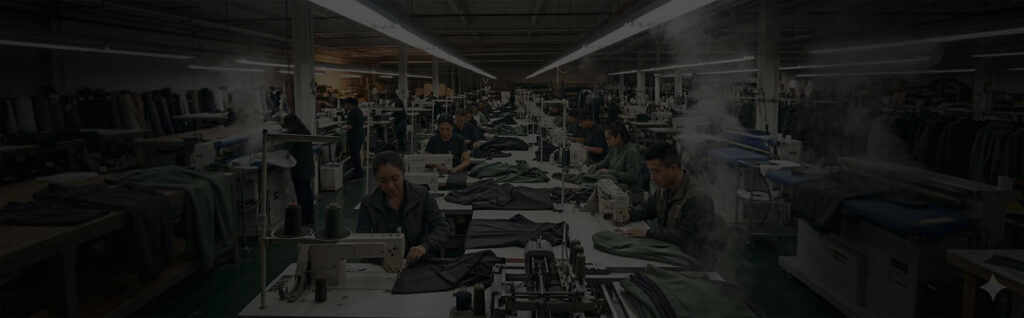
An athleisure brand selling into Europe and the US makes its recycled-fabric casual sets and cuffed joggers with us, from 100 pieces a style, fully private label with custom outer packaging. Production stays in our own GRS-certified plant, with QC at cutting, sewing, and finishing to hold export quality.
Outcome: The recycled fabric and certification gave them the paperwork they needed to get into mainstream offline retail.
Our Terms, In Writing
Most factories make you email three times to learn their MOQ. Here is everything, up front.
| Term | What we commit to |
|---|---|
| MOQ | 100 pieces per colorway. Activewear fabrics (nylon/spandex, poly/spandex) carry higher mill minimums than jersey knits — we publish the real number instead of quoting 100 and adding multipliers later. Sizes are mixed freely within the 100. Knit categories (tees, hoodies, loungewear) start at 100 pcs per colour / design. |
| Pricing | From $4.80/pc FOB. We don’t publish one fixed unit price — fabric, weight, decoration, colourway count and packaging all move the number. Send us your style and target quantity and we quote every tier (100 / 300 / 500 / 1,000) in one email, so you can see exactly what scaling saves you before committing. |
| Sampling | Sample fee applies per style, itemized on your quote. |
| Bulk production | 30–45 days after sample approval, including fabric sourcing. |
| Reorders | 10–15 days. This is where working with the actual factory pays off. |
| Payment | 30% deposit, 70% before shipment. |
| Shipping | FOB Shanghai or Ningbo, or DDP door-to-door. We quote both, so you can compare true landed cost — not just the factory-gate price. Our factory is in Suzhou, Jiangsu; both ports are within a short inland haul. |
| Certifications | OEKO-TEX® Standard 100 and GRS 4.0. Certificates and our business licence sent on request. |
Why Buyers Trust Renrui Textile
10+ Years
You buy straight from our factory, not through a trading company.
From 100 pcs
Low minimums on performance wear, with flatlock construction.
Fast Sampling
Real samples in days, not weeks, with the timeline written into the quote.
3-Point QC · AQL 2.5
Checked inline, again at 30% done, and before it ships. If defects exceed AQL 2.5, we remake or refund.
Certified Materials
OEKO-TEX® Standard 100, GRS 4.0, BSCI, ISO 9001
In-House Production
Cutting, sewing, decoration, and labeling all in one place.
Frequently Asked Questions
100 pieces per style per colorway — not 100 per set. A coordinating set (sports bra + legging) requires 100 pcs of each style separately, because they are cut, sewn, and quality-checked as independent production units. Some factories advertise set MOQs that bundle the two items together in a way that sounds lower but produces the same minimum fabric cut. We state it plainly: 100 pcs per style, per color. Below that, proto samples are available at 1–3 pieces per style at sample pricing.
Sublimation and screen printing are not interchangeable for activewear, and the right answer depends on what your logo is and where it sits.
Sublimation dyes the fiber — the print becomes part of the fabric — so it moves with the stretch without cracking and works on polyester-dominant fabrics. If your base fabric is 80% nylon or 88% polyester, sublimation is the correct choice for any all-over or large graphic.
Screen printing sits on top of the fabric surface. On high-stretch materials, thick screen print deposits crack at 40–50% stretch, which is easily reached in leggings at the thigh. For small chest logos on low-stretch woven waistbands, screen print is acceptable. For logos that will cross a high-stretch panel, use sublimation or silicone heat transfer. We do both in-house and will flag print placement issues during the tech pack review stage.
Our standard performance fabrics — nylon-spandex and polyester-spandex base constructions — are sourced from mills with OEKO-TEX Standard 100 certification at the fabric level. We can provide mill certificates for your compliance documentation. REACH compliance (restricted substances, EU) is met by our standard fabrics. If you are selling into the EU and need REACH declaration documentation, we generate a per-order declaration based on mill test reports. What we do not do is make blanket certification claims without the underlying documentation — if you need a specific certification for a specific market, tell us during the inquiry stage and we will confirm whether the exact fabric spec you are ordering carries it.
Sports bras are one of the more technically demanding items in activewear because the support structure, strap attachment, and underwire (if any) are all load-bearing elements, not just aesthetic ones.
Customization available: strap width and configuration (straight, crossed, Y-back, T-back, removable straps), cup construction (molded foam cup, foam-free shelf cup, built-in bra with sewn-in padding), underwire or wire-free, back closure type (clasp, pull-on, racerback), and all panel print options via sublimation.
What we do not customize: we will not reduce the strap seam stitch density below our structural minimum (double-needle lockstitch on all strap-to-band joins) to save cost. We have had clients ask. The answer is no. Sports bra strap seam failures at gym use frequency are a return and liability problem that we will not take on.
Conditional yes, with honest caveats. Rush production (18–22 days from sample approval, versus our standard 30–45 days) is available for styles that use stock fabrics — our in-house nylon-spandex and polyester-spandex inventory — without custom dye. The surcharge is 20%. It is not available for orders requiring custom fabric sourcing, custom dye lots, or novel construction types we have not built before. The reason: activewear construction on stretch fabrics requires calibrated tension settings on every machine. When we rush, we compress the adjustment period and increase the probability of seam tension inconsistency across the production run. We offer rush selectively, for styles we know well, and we will tell you clearly when a rush timeline is not realistic for the specific item you are ordering.
Related Manufacturing Services
Request a Private Label Activewear Quote
Why Request a Quote From Us
- ✅ Low MOQ — from 100 pcs per colour / design
- ✅ OEKO-TEX® Standard 100 & GRS 4.0 certified materials
- ✅ Full OEM / ODM — your design, labels & packaging
- ✅ Sample turnaround in 7–10 days
- ✅ Free fabric swatch pack on request
What to Include in Your Inquiry
- Styles & target quantity
- Material / fabric preference
- Target price & deadline
⏱️ We reply to every inquiry within 8–12 hours.
You can also reach us directly:
WhatsApp: +86 13372169755
E-mail: [email protected]